Tag Archives: short story

The Boy Who Went in Search of Fear

The Boy Who Went in Search of Fear
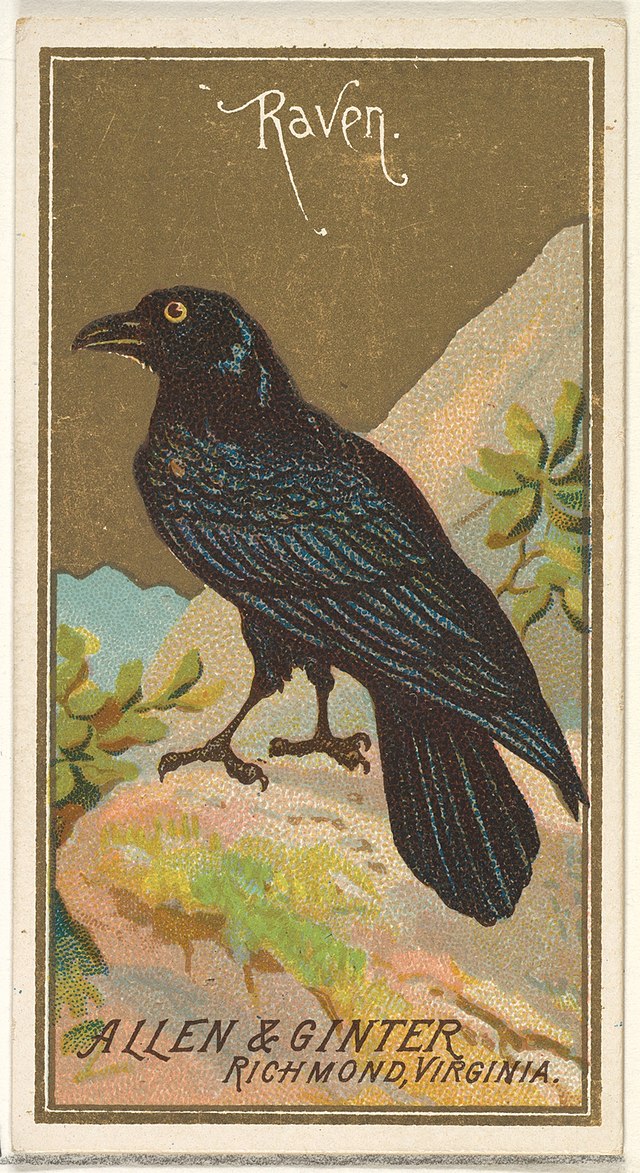
Once upon a time there lived a Mother and son in a fine but tiny house on small farm.  One night, during a terrible storm, the mother told her son to go and draw closed all of the shutters.

“But why, Mother?” the boy asked.

“Without your father near,” she said, for her husband had passed two years before, “I am afraid of the lightning and thunder.”

“What is fear?” the boy asked.

“If you do not know I cannot tell you,” Mother replied.  “It is a sinking feeling of dread.  No, it’s a sudden shock of…oh fiddle!  It can be so many things !  I don’t think I can describe it!”

“If you can’t describe it, perhaps it isn’t real,” the boy said.

“I assure you, fear is very real,” she said.

They talked for some time, but still the boy could not grasp what she meant by ‘fear.’

When he awoke in the morning he was still obsessed with the subject, and so at length he decided he would go on a quest to find fear.  He began by going to where one of the farmhands was repairing the cow fence.

“Hey Jack,” the boy said to the farmhand, “I want to know where I can find fear.  Have you any ideas?”

“Start by spending a night in the graveyard.  Surely there you’ll find fear,” the farmhand replied sarcastically.  He felt certain the boy would not be brave enough to try it.

But the boy was indeed brave enough.  He decided to go on a quest to find fear, starting in the graveyard.  He would not return home until he found fear.  He packed a bag of food and water and headed toward the cemetery.  At dusk he arrived, and there amid the headstones he built a small fire and settled in for the night.  The sun went down and stars came out.  But the sounds that would have scared most boys nigh unto death – the rattling of tree branches, the fluttering of leaves, and the howls of wolves in the woods nearby — never gave him a fright.

About midnight, as he was going off to sleep, one of the sepulchers opened and out stepped a walking corpse!  The corpse shuffled up to the boy ominously and stood there moaning and staring.

“You must be cold,” the boy said cheerfully, adding a few sticks to the fire.  “Pray you poor soul, have a seat and warm your tired bones.”

The corpse sat down and kept the boy company all night.  The boy was unafraid, and together they talked of many things ancient and modern, sacred and wise. In the morning the boy expected the corpse to rise and return to its rest; but to his surprise, as soon as the first ray of morning sun struck it, the corpse transformed into a young raven and flew away.

“How curious!” the boy exclaimed.  He pulled a snack from his bag, rose, and moved on in search of Fear.  His day wandering on the road was largely uneventful until the sun had set.  Walking along the dark and lonely road, he saw a glow in the distance. 

“Fire!” the boy cried and ran in that direction as fast as he could.

Soon he came upon a house that was engulfed in flames.  Not a soul was in sight, but in the second story window he saw the silhouette of a maiden and heard a piteous cry.

Completely without fear, the boy ran into the front door and bounded up the steps two-at-a-time, dodging flames as he went.  Following the cries of the maiden, he avoided the flames and reached the bedroom where she was trapped.  He leapt over the flames blocking the door, scooped up the terrified girl, and out ran with her, oblivious to the heat, flames, and smoke.  Out the front door into the yard he ran.  There he stood her on the grass and looked her up and down.  She was a beautiful thin girl with hair of platinum.

“You seem none the worse for wear,” the boy said.  “Are you alright?”

“Perfect, thanks to you, although the house is beyond saving,” she said.  “Not even you could save it.  Thank you ever so much.”

“All in a day’s work,” the boy said.  “See here, you must be thirsty.  Let me fetch you some water.”

The boy went to the well, drew up a bucket of water and grabbed the ladle from its hook beneath the cupola.  He returned with the water and the two drank their fill.  By the glow of the fire they kept company all night long.  And when they grew tired, the girl with the platinum hair put her head upon his lap and fell fast asleep.  Although he had not found Fear, the boy thought he might be about to find something else that he had never felt before, for the girl was very beautiful indeed.

When morning came the boy urged her to awake.  Her eyes opened and she smiled sweetly.  But before she could speak, the first ray of morning sun fell upon her and she transformed into a full-grown raven, flew away, and was gone.

“No!” the boy exclaimed, sad to see her go.  But there was nothing he could do.  Feeling dejected, he produced a snack from his bag, rose, and resumed his search for fear. 

His day upon the cold and lonely road passed without remark.  At length the road ran along the cliffs by the sea.  As he walked he listened to the waves pounding the shore below and watched the iron clouds bang to-and-fro.  Just about dark a storm came up.  Lightning flashed and thunder rolled, but the boy overcome, not with fear but with  admiration for the majesty of the scene.  He stopped and looked out at the raging breakers, and there he saw a ship running a-ground in the surf. 

Without hesitation, the boy jumped from the cliff and fell a hundred feet down, his body as straight and as strong as a mighty nail, and plunged into the water without a splash.  Rising to the surface, he swam out to the ship.  As he bobbed about in the turbulent water below, the seamen on the slanted deck above pointed and yelled in the direction of the maidenhead at the fore of the ship, but the boy could not make out their words over the cracking of the ship’s hull on the rocks and clamor of the tempest.   Still, he swam in the direction they were pointing.
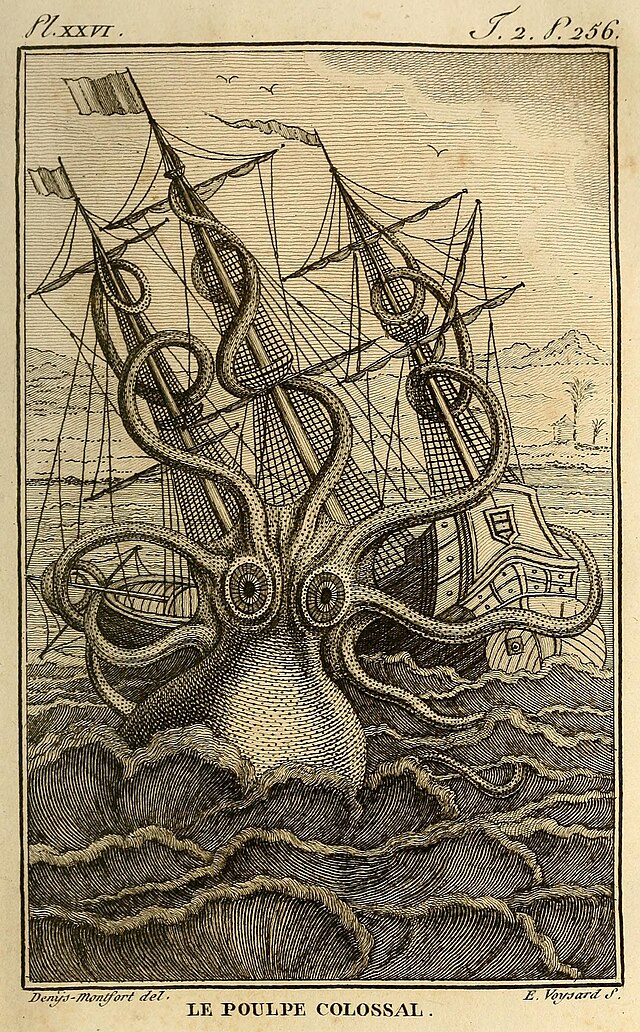
When he reached the bow, he saw a danger even more immediate than the rocks — a horrible tentacled monster threatening to slay the sailors as soon as they dove into the water! The boy grabbed a tentacle and swam unflaggingly for shore, dragging the shrieking beast with him.  At one point the beast encircled his entire body, but the boy did not flinch; he bit the animal until it released him and swam on.  At length he hauled it far up onto the rocky shore.  Out of the water the beast was crippled, and there it flopped and hissed, spasmed and shrieked.  The boy left it there and swam back to the boat.  One-by-one, he helped the sailors back to shore while their ship broke up amid the storm.

The sailors were overjoyed and offered to take up a collection to reward the boy, but he would not take the coins in their pockets.  Together they all took shelter among the caves beside the water and shared company through the night as the storm abated.

Just before sunrise, the boy and the sailors went back to the beach to look at the monster in the light of day.  But as soon as the first ray of sun struck the slimy beast, it was transformed into a large raven that took flight and soared off into the distance.

“Curious indeed!” the boy cried.  After chatting with the sailors for a bit, and telling them which way they should walk down the beach to find the nearest port, the boy bid them goodbye and began to make his way further down the beach in search of a way back up to the seaside road.  At dusk the sandy beach gave out and he came to a cliff so sheer and so high that he could not see its top.  The boy looked up into the darkening heights and said, “Surely if I was to scale this dangerous cliff in the dark, I would know fear.” 

As the sun fell he began his climb.  He whistled a tune as he made his way up, in good spirits despite taking great care when climbing the chalky stone that threatened to crumble beneath his hands.  Unafraid of the stiff wind that made him stick close to the cliff face or be blown to his doom, and utterly immune to any fear of the dizzying heights, he looked out in wonder at the incredible view.  The moon shone over the dark, pounding surf which echoed up to him like distant thunder.  Thin clouds, blowing like silver gauze across the dark blue heavens, glowed when they crossed the path of the moon.  He was sure it was the most incredible sight he had ever seen.  He sensed something then that seemed very close to what his mother described as fear, but soon realized that it was not fear, but its first cousin: awe. 

About midnight he came upon a nest as large as a pig pen piled high with twigs and limbs.  Beginning to grow cold, the boy entered the nest and looked about.  In its center sat a large grey egg as big as a gallon jug!  He went over to the egg, placed his hand upon it, and found it warm.  Although the high sides of the nest broke the wind, the egg was in danger of freezing without its mother there to sit upon it.

His stomach grumbled for want of food, for his bag of food had been lost in the dive to save the sailors.  This egg would make a hearty and welcome meal, he thought, and the nest provided ample kindling for a cooking fire!  But he could not do such a thing to a magnificent egg such as this.  Without another thought, and with no fear or worry that its angry mother might return in the middle of the night, the boy sat down and put the orb in his lap.  There he spent the night, sharing his warmth with the egg.

In the morning he was delighted to see the sun come up and he turned his face toward it.  Looking up he saw that he was only a short climb from the top of the cliff.  “You’ll be warm enough soon,” he said to the egg.  “Here come the first rays!”  And as soon as the first ray of the sun crept over the high rim of the nest and fell upon the egg its shell gave way.  Out of the egg came a massive raven, fully feathered and ready to take flight, that swiftly flew away into the rising sun.

“Even curiouser than the last!” the boy cried aloud.

He finished the last of the climb in a trice and made it to the road.  As he walked along the boy became convinced that he would never find fear.  Certain that he must be some kind of freak, and resolved to the impossibility of the quest, his face grew hot with shame at the thought of giving up.  But why go on?  He thought it best to head home and comfort his dear mother who must be very worried.

He took a shortcut through the woods, and about sundown he entered the square of the town.  All the residents were crowded there, and the town’s elders were addressing the great assembly.

“The King has died leaving no heirs,” the eldest of the elders declared.  “Being at an impasse, we have decided to set free this young raven.  Whomsoever the raven shall alight upon will be named King.”  So saying, the elders released the raven, which wheeled and circled over the crowd.  To the boy’s surprise the little raven landed on his shoulder.  All the eyes of the town fell upon him.

Gripped by a strange and unknown feeling, afraid for the first time, the boy cried out, “No, I am not qualified!” He thought the young raven looked familiar, but he could not be sure.  “And besides, a king must be prepared to die for his country!”

“You must!” the elders insisted, but the boy would not accept.  After some argument, some of elders thought it best to choose a king from one of the rich merchants of the city.  But eventually they simply decided to try again.  They released a second, full-grown raven which again circled over the crowd.  To the boy’s surprise, the second raven also landed on his shoulder.  All the eyes of the town fell upon him as he realized that this was the raven that once been the platinum-haired girl.

“No, I am not qualified,” the boy proclaimed, now afraid for the second time.  “And besides,” he said, thinking of the platinum-haired girl, “a King marries only for allegiances, never for love.”

“You must!” the elders insisted.  But after some argument, some of them wanting to pick a worthy knight for the job, they decided to try again instead.  They released a third, even larger raven which circled ominously over the crowd.

To the boy’s surprise, the large raven, which he recognized straight away as the one that had risen from the corpse of the sea monster, landed on his shoulder.  Again all the eyes of the town fell upon him.

“No, I am not qualified,” the boy declared, afraid for the third time.  “To be King is to be responsible for the safety of everyone in the kingdom!”

“You must!” the elders insisted.  But after a great argument, some the elders thinking it best to choose one of their own number as king, they agreed to try again by releasing a fourth, and even more massive raven, which wheeled and circled over the crowd.

To the boy’s surprise the huge raven, which he was certain was the one that emerged from the egg on the cliffside, circled above him clearly seeking him out.  The boy extended his arm and the huge raven lighted upon it as if it was a falconer’s hunting bird. Now all the eyes of the town fell upon him and there was a great tumult.

“No, I beg of you, I am not qualified,” the boy proclaimed, now afraid for the fourth time.  “To be king is put the wants and needs of others ahead of your own.”

Suddenly the boy’s mother appeared from the crowd.
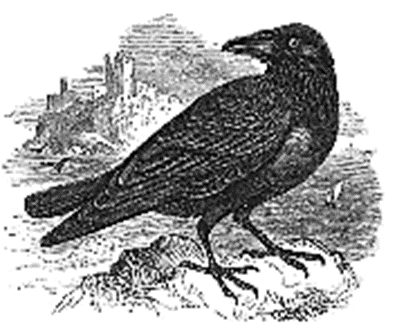
“But you must!” she cried.  “I can see the fear upon your face my beloved son.  Having found your only fear you are qualified — more qualified than any other!

With great reluctance boy accepted the title and the crown, and he reigned in peace for many good years until his death – which he faced completely without fear.

My Story in Quail Bell Magazine

I’m proud to announce that my short story “Iron Paul” was accepted by Quail Bell Magazine.  You can read it here.

“Iron Paul” is the story of an aging lathe operator in a baseball bat factory.  Paul is struggling to adjust to changing times and attempting to determine which of  his company’s time-honored traditions are valuable and which are not.

Quail Bell Magazine is “a social and artistic experiment in the imaginary, the nostalgic, and the otherworldly.” Although this woman-run shop is centered in the Washington, D.C.-Maryland-Virginia area, they publish content from all over the world. Their publication and website will not only challenge and inform you with content of all kinds — journalism, art, literature, photography — but it will also entertain and amuse.  So, basically, reading Quail Bell Magazine is sort of like getting your feet tickled by the giggling toddler love child of Edgar Allen Poe and Emmeline Pankhurst.  Not really.  I don’t know what I’m saying.  It’s just cool, and fresh, and original, and sincere.

So go check them out.  And while you’re there, check out my story too.


Horror Shot: Pressed Flowers

As I promised on Monday, here is a free shot of horror, 2,500 words of weirdness I have titled…

Pressed Flowers

The flower shop was small and crowded with cold cases and displays but the ceilings were high and the mood was bright.  Hanging baskets on five foot chains meant the plants still needed to be watered on a step stool.  A teenaged boy was doing just that when she entered.  Tall windows, trimmed in white with intricate moldings, lit him from behind.  The youth was thin and beautiful, an altar boy tending plants instead of candles.

“Excuse me,” she said to him after the bell on the door stopped jingling.  “Is Mrs. McGlidden in?”

“Are you here to pick up an order?”  He came down from the stool with a watering can in his hand.

“No, no order,” she said.  “I’d just like to have a word with Mrs. McGlidden, if she has a minute.”

“Okay, she’s in the back.  I’ll get her.”

“Thank you so much,” she said.

A woman came from the back room a moment later and met her over the wide counter.

“Martha McGlidden,” the woman said.  She shook her grey hair and worked her stiff fingers, extended her hand like a man.  “Whom do I have the pleasure?”

“Lori Davis.  Pleased to meet you.”

“Pleased to meet you too,” Martha said.  “What’s the occasion?”
“Occasion?  Oh — I’m not here about flowers,” Lori said.  “I’m sure you don’t recognize me, but you do know me.  I’m the biographer who wrote the book about Jeb.”

“No, doesn’t ring any bells.  I’m sure I didn’t read your book.  I just don’t have time to read anymore.  Which Jeb are we talking about again?”

“Jeb McGlidden, the famous recording artist.  He was your husband’s cousin.”

“Oh yes, that Jeb,” Martha said.  “I’m sorry, I’ve been stooped over arrangements all morning and I’m out of it.  My husband wasn’t very close with Jeb, and I never actually met the man.  If you wrote his biography you know that he was quite a rolling stone, never around for holidays or family get-togethers.”

“Of course,” Lori said.  “I understand your husband passed away last year.  I’m sorry for your loss.”

“Thank you,” Martha said.  “He was a wonderful man.  So what can I do for you today?”

“I’m doing research for an updated edition of Jeb’s biography.  My publisher thinks it’s a good idea to, you know, add some new material, more details, that kind of thing.”

“Oh goodness, I mean, I just don’t know much about Jeb.  Honestly, I don’t think my husband did either.”

“I understand,” Lori said.  “I wonder — do you have any photo albums, cards, letters, memorabilia that I could look at?  I know you’re busy.  I could meet you later.  I’m going to be in town for a few days.  Completely at your convenience.”

“I suppose I could take a look this evening,” Martha said.

“That would be fantastic,” Lori said.  She picked up one of Martha’s business cards from the counter and wrote down her number.  “Give me a call and I’ll come by.  Or we could meet over dinner, my treat?”  She handed Martha the card.

“Dinner might be good, but let’s play it by ear for now.  Who knows if I’ll even find anything.”

“Nothing’s too small.  Anything you have about Jeb would be valuable to me.  Anything.”

“Okay, well, I’ll keep that in mind, and I will call you.  But right now, I really need to get back to work.  Let me see what I can find,” Martha said.  “I’ll call you.”

“Thanks so very much,” Lori said.  “Very very much.”

“You’re very welcome,” Martha replied.

“Talk to you soon.”

“Yes, soon.  Have a good day.”

Lori waved to the boy and set the bell jingling again as she went out the door into the street.  She bounced down three stone steps cupped in the middle from a hundred years of scuffling feet and turned right on the sidewalk.  The clock above the bank next door read five after ten o’clock, temperature fifty-one degrees.  There was nobody in sight on the broad clean street, no litter in the gutters, and no cigarette butts blew up in drifts like they did in the city she called home.  A few red leaves tumbled around in the sunshine.  She drew up her phone and took some pictures of the street and of the signs.  She had never seen a place this before, a place this clean and uncomplicated, a place as crisp and fresh as the mountain air.

In the distance she saw a familiar red marquee.  Apparently the little town had attracted the attention of a nationwide drugstore chain.  She pulled up her phone, went to the website, and verified that even this small town branch offered photo processing.  She made a mental note to take advantage of her good fortune later.

At the corner she caught the sign for Dan’s Market on the opposite side of the street.  There was no flashing sign to say “WALK” or “DON’T WALK.”  Lori waited for a truck to pass then crossed.  She snapped a picture of the grocery store sign.  An elderly man was exiting the place with a squeaky red wagon holding a cardboard box of groceries.  She held the door for him.

“Thanks Missy.”

“You’re welcome,” she said.

A middle aged lady at the single checkout line smiled at her.  “Can I help you find anything?”

“No thank you, I’m not here to shop,” Lori said.  “I guess you can tell I’m not from around here.”

“Yes ma’am, I can.  I pretty much know all the faces.  What can I do for you?”

Lori went through her routine about the re-release of the biography and asked the clerk if she knew Jeb McGlidden.

“Oh my gosh, I didn’t realize he was famous!  Well, as much I’d like to be quoted in a real book, I can’t lie and say I know much.  He worked here bagging groceries as a kid, two summers running, and we chatted a little bit I guess, you know, the way people do when they work together.  That was before I took over running the place for Dan.  Back then I was just a cashier…”

They talked.  The cashier introduced herself as Jillian Quarles.

“What was he like?”

“He was great kid, you know.  You could tell he was going to make something of himself someday.  He was handsome, outgoing, and he used to sing when he mopped the floors just before closing time.  Boy, he could sing good.  He could really sing, if you know what I mean.  Not just carry a tune, I mean really sing.”

They talked awhile longer.  Lori got out her pad and took notes.  When the details stopped coming and Jillian began to repeat herself, she put her pad away and smiled.

“Now Jillian, you said you didn’t know much!” Lori said.  “You’re a treasure trove!  Is it alright if I quote you in my book?”

“Of course you can,” Jillian said.

“Can I have a picture as well?”

“I’m not really dressed…”

“Not for publication,” Lori assured her.  “For my files.  I meet so many people you know.  And you were so fun, so exceptional, I just don’t want to forget you.”

“That’s so sweet.  Well, okay, sure,” Jillian said.

Lori took a picture of Jillian and snapped a few more of the interior of the store as well.  They said their goodbyes.  There were lots more stops to make.  She got out her pad and flipped back to the check list of locations she had to cover while she was in town.

***

In a window booth at the Ridge Diner, Lori unfolded her map.  It no longer crinkled when she spread it out.  It was soft and thin, pummeled from paper into cloth by almost constant use.  She put her finger on Nashville, Tennessee where Jeb had died five years ago in a dressing room at the Lemondrop Club, his life cut short by a drug overdose.  She traced her finger up the blue pencil line she had drawn, up Route 65 to Louisville, Kentucky where Jeb had stayed for several years playing small clubs before going to Tennessee.  She followed the blue line further up, tracing Route 71 to Cincinnati, where he had only stayed a few months, then East on Route 32 for a bit before the line got wavy and broken.  Those had been Jeb’s soul-seeking months, going from park to park with his yellow labrador and spending nights in his van.  The line ended up in Charleston, West Virginia where he had spent a Fall and Winter with his half-sister Marquesa.  From there it went down Route 77, out 64 East to 81 North, and up to Luray, Virginia where he was born and raised.  She had sailed upriver to the source, from his end in Music City to his beginning in this small town in hill country.  There wasn’t much left to see.  Tomorrow she would go and take pictures of the house he had grown up in, and if there was time, visit his father’s grave.

It was getting dark.  On the idle street outside the diner window a single pair of approaching headlights came to life.  From her messenger bag she got her scrapbook, a glue stick, and the pictures she had printed at the drugstore.  She pasted them in carefully, drank more coffee, transferred her notes from the pad into the blank spaces beside the pictures.  The book was getting full.  It was almost complete.

Her cell phone vibrated on the table.

“Hello?”

“It’s Martha McGlidden…”

Martha had a few things for her but not time to share dinner.  Lori suggested she come and join her at the diner for a cup of coffee.  Martha agreed.  While she waited for her source to arrive Lori ordered a slice of pie, slipped in her earbuds, and listening to a selection of Jeb’s tunes from her cell phone.  The pie was perfect.  Maybe when Jeb was a young boy working at the Dan’s Grocery he had sat in this exact booth and eaten pie, had looked out at the road and thought about making his way to Nashville someday.

Martha came in, waved to a waitress she apparently knew, and walked over to the booth.  Her face was serious and she did not take off her coat.  Lori stood and offered her hand.

“Hello again.  Thanks so much for coming.”

“Oh, it’s no bother,” Martha said.

“Would you like some coffee or…”

“No thank you, I can’t stay long,” Martha said.  “I’m sorry, but after the day I’ve had, I’m too through.  I’m ready to settle into my favorite chair and have a glass of wine.  I have a wedding tomorrow, and flowers to deliver by ten, so…”

Martha had brought a small manila envelope of pictures from Jeb’s childhood.  Jeb was an awkward looking boy with big ears, but very cute.   She pointed to the people in the pictures and Lori penciled the names on the backs.  Many of the names were familiar to Lori from prior research, people whose faces she had never before seen.  She found it hard to keep from babbling with excitement.

“You know,” Martha said, “I tried to find your book online so that I could buy a copy.  I couldn’t find it.”

“Oh,” Lori said.  “I guess the publisher must’ve pulled it down in preparation for the second edition.  I’ll have to look into that.”

“Funny though,” Martha said.  “There should at least be a few used copies available…”

“You’d think the publisher would leave it up to clear out the old edition,” Lori said.  She drew a ten dollar bill from her bag and put it on the table to cover the coffee and pie.  “It just doesn’t make sense.”

“No it doesn’t,” Martha said.  “It’s as if your book doesn’t even exist.”

“If I’ve learned one thing about publishing Mrs. McGlidden, it’s that nothing about the entire business makes any sense.  Well look, I know you have to get to bed early, so I won’t keep you,” Lori said.  She stood up and put on her coat.

Martha looked up at her with squinting eyes in search of focus and detail.  “When I couldn’t find your book I called one of my friends, a notorious gossip in these parts.  She said she heard that Jeb had a child with some groupie he met in Nashville.  You should find that girl and interview her.  I’m sure she’d be a wealth of information.”

Lori ignored the woman’s probing, tucked the envelope of pictures into her bag.

“Thanks so much for the suggestion, for the photos, and for coming to meet me.  It’s been a pleasure,” Lori said.  She shook Martha’s hand.  “Good luck with your wedding job tomorrow.”

Lori walked out into the cold dark air.  At the next corner she turned off Main onto a side street, cut through an alley, and doubled back to go in the opposite direction.  There weren’t many cars on the road.  She pulled a stocking cap from her bag and a pair of gloves.

It was a long walk out Route 211 to the camp ground.  It took almost an hour, but the shoulder was wide and grassy for most of the way, and the sky was a brighter blue than it was in the city.  The foothills of the Blue Ridge were rounded and distant, beautiful, ominous.  The bag on her shoulder was heavy.  Even with the book almost done, there was still so much to do and so much farther to go.

The sign for the campground was brightly lit.  Lori walked up the asphalt drive and down the gravel lane.  She unlocked the door and entered the camper, went to the bedroom in the rear.  She opened the giant cream-colored dog crate beside the bed and identified the smell.  She had left him too long.  Her baby had made a mistake inside.

“I’m sorry I was gone so long.  Poor Little Jeb Junior,” she said.  “Come to Mommy.”

He crawled out and into her arms, big brown eyes looking sad.  He was getting so big.  Every day he looked more and more like his father.

“Are you mad?” he asked.

“No honey, no!  It’s not your fault you made a mess, it’s Mommy’s fault,” she said.  “Let’s get you cleaned up, and then we’ll have some dinner, okay?  After dinner I can show you all of the great stuff I got for your book, so that you can grow up to be just like your Daddy.”

“Thanks Mommy.”

“Oh honey, you’re welcome,” she said. “Now let’s get you out of those dirty clothes and get started.  It’s getting late, and you need to read your book and practice guitar before bed.”

Hat Racks, Crafts, and a Short Story

image

Hat rack I made from tree trimmings

My Sunday routine is to blog for the week.  Yesterday however I had three problems that prevented me from writing the usual four or five weekly posts.

The first: I realized that a man with a mild hat obsession should not be without a place to hang  his lids.  Otherwise he will find them all over the house, piling up in drifts like autumn leaves.  So I made a hat rack for my favorites and put the rest in the bedroom closet.

Problem two: We’ve been in this house for thirteen years and still have no proper curtains for the upstairs bathroom (I’ve been tied up, okay?).  So I got out the sewing machine and remedied that problem.

Third and most ‘pressing’ problem:  I had an idea for a short-story, a horror piece called Pressed Flowers.  I had started it earlier in the week and it was begging to be finished.  So I knocked out the second half and decided to post the entire tale on Wednesday.

Look for it — it’s a beauty.

Two posts is all you get this week.  Stop your whining, will ya?


Bradbury Challenge: Weeks 13, 14, and 15

My modified version of the Bradbury Challenge continues…

To be truthful, I’ve been working on this challenge since late July and the pressure is getting to me.  I really need to finish my re-write of The 14th Mansion, and writing a short story a week is sucking up vital writing resources (commonly referred to head space).  But hey, if it being a writer was easy, everybody with a laptop would be J. K. Rowling, wouldn’t they?

Week 13: I wrote a story called Titans Rising, a tale that uses surreal imagery to explore the relationship between humanity and technology.  Wasn’t quite able to finish the story, but in keeping with the spirit of the challenge, I moved on.

Week 14: I penned G.E.M., a story about the next step beyond Technologically Enhanced MindfulnessGenetically Enhanced Mindfulness, or G.E.M.  What happens when a particular spiritual viewpoint is embedded in your DNA and you can’t think the way you want to?

Week 15: This week I’ll come up with a new idea, and if there’s time, go back and finish Titan’s Rising.

Bradbury Challenge: Weeks 10, 11, and 12

The challenge continues to be a beneficial exercise, although keeping up with writing a story a week while editing the new novel is problematic.

Week 10:  I got in very little writing time owing to caring for an aging relative.  Stuff happens, right?

Week 11: Wrote a short story called “Danny’s Debts” that, although it started out as a simple twist story in the Twilight Zone mold, turned out to be rather profound exploration of indebtedness.

Week 12: This week I started a tragic story called “Transitory.”  Peter is a philosophy professor who has a nightmare so profound that it shatters his vision of reality to the core.


My Story in Paperbook Collective Issue 3

I have had the honor of getting my story “Gabby and Mike” into Issue 3 of The Paperbook Collective.  You can read it free online here.

The Paperbook Collective is a creative collaboration that includes work from around the world.  It features  flash fiction, short stories, creative non-fiction, book reviews, travel writing, poetry, travel writing, artwork and some very impressive photography.

If you’d like a paper copy, The Paperbook Collective is available in ‘zine format for $8 AUS.


Bradbury Challenge Week 2

So far so good regarding the Bradbury challenge.  Last week’s short story is called Third Time’s the Charm.  A twice reincarnated man makes his second return during the Holy Roman Empire.  After years of study and seeking, a street vendor offers him a good luck charm that he instinctively feels may be the key to unlocking the meaning of life.   Will his third walk upon the earth reveal the truth?  Could it be that the third time is literally the charm?

The Ray Bradbury Challange

415px-Planet_Stories_November_1953_cover

Planet Stories feat. Ray Bradbury (courtesy of Wikipedia)

Author Ray Bradbury , most famous for his novel Fahrenheit 451, was known to hand out advice to struggling writers.  There’s a fair amount of it available on the net, including a talk he gave back in 2001 (see link below).

He issued two famous challenges.  The first, which seems to me to me the lesser of the two in terms of payoff, is to read a short story, an essay, and a poem per night for 1,000 nights.  The second, and I think by far the harder challenge, is to write a short story per week for 52 weeks.  Lots of people, like Lin and some weird guy living in Japan, have accepted one or the other challenge.  It’s fun to watch how these exercises are changing writers.

With that in mind, last week I accepted the second challenge albeit in a modified form.  I will write a short story a week, not for 52 weeks, but until I get to 80,000 words.  When I hit 80,000 words I’ll self-publish the collection at Smashwords.

Last week’s story is called Shiflett Courier Service and it’s about a cop who, after getting shot in the face during a robbery in progress, retires and starts his own courier service.  Years later, when he least expects it, he once again finds himself staring down the barrel of a gun.

This week’s story is called The Assassination of Jhoon Hebren.  Speaker of the House Hebren and his protoge Nico Carter find themselves embroiled in a Justice Department investigation concerning a secret group called Kensho Hat.  Hebren denies everything because he isn’t involved.  Or is he?

This is going to be fun ride.  Shouldn’t be too hard to keep my pencil sharp while the editors are reading my novel The 14th Mansion.  But it’s going to get really challenging when the proofs come back and I start the novel re-write.

Will I be able to write a short-story a week and finish the final draft of the novel at the same time?

I guess you’ll have to stay tuned to find out…

http://www.youtube.com/watch?v=_W-r7ABrMYU

I’m a Winner — TELEPORT US! Short Story Contest at LitReactor

Not the winner, but a winner.  Happy to say my story Ms. Ishmael’s Box made the Winner’s List in the TELEPORT US! sci-fi short story contest over at LitReactor with a 100% thumbs-up score.

There were no ranks or places, just a winner’s list.

My prize?  Sci-fi author Adam Christopher is going to review my story.  Can’t wait to see what he has to say.  I already got a ton of great feedback from other aspiring writers, and I plan to fine tune the story and submit it somewhere for publication.

LitReactor is a great way to hone your skills and get some criticism from other writers.  They offer classes, workshops, literary news, hints and how-to articles, and even publicity.  If you write, by all means check it out.