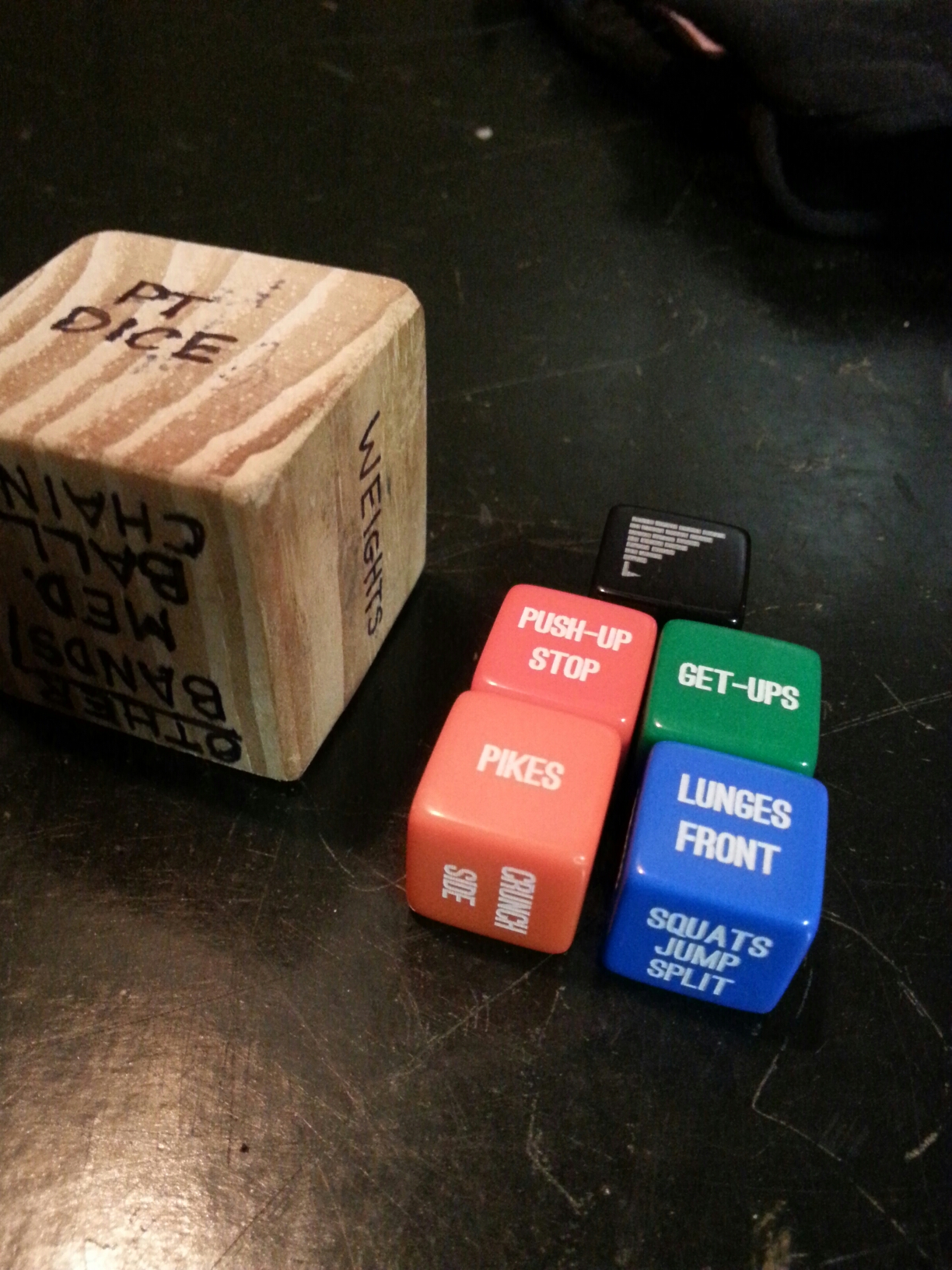
MEDICINE BALL (AMRAYC in 10 mins w/ #12 ball of 8 each Push-ups, Side Lunges, Wall Touches, Sit-ups); FREEZE TAG KICK DRILL (5 rounds 1:30/:30, as many kicks as you can 1:30, when bell rings, freeze stance, sink as low as you can and hold :30, even if you’re on one foot)
A recent post by Steve Grogan entitled “Why I Prefer Spirituality over Religion” got me thinking. I started to simply reply in the comments, but I soon realized that I had far more to say. Here is Steve’s post:
And here’s my response.
————————
Steve:
I understand how you feel. Truth be told, I have had similar knee-jerk reactions myself. But deep down, I don’t believe that many people are “churned out of churches” with narrow viewpoints because they have ideas “ground into them.”
You have come upon the verge of a powerfully brilliant realization, and I hope you don’t mind if I — one martial artist to another, in a friendly way — give you little helping hand making the leap.
Humans are not generally stupid or easily brainwashed. I believe people sometimes espouse ideologies they really aren’t deeply invested in, and that they do so for reasons that are frequently quite mundane. They make investments in order to receive gains. If they are lonely, they may go to a church to make friends or to interact with existing ones. If it benefits them socially, politically, or commercially, some folks will attend a church just so that they can hobnob with powerful people, make business contacts, and so forth. This group explains why, as you said, some people you perceive as religious don’t practice what they preach.
Others attend a given church out of tradition. Going to the same church that grandma and grandpa attended provides a sense of security, stability, and comfort. Or maybe they just go because they’re bored, or because they feel they’re supposed to.
And there are the role players. These are people who attend churches to pursue their self-aggrandizement, so that they can either feel — or appear — pious, hardworking, selfless, and/or committed. They volunteer for projects, try to raise the most charity money, lead the choir, the committee, the study group, etc.
Many go to church in search of guidance and direction. The ones who are free-thinking and determined may stay for years, quietly studying and seeking, perhaps even secretly harboring a viewpoint divergent from fellow congregants, holding out hope that someday enlightenment will come. Others are more rudderless. For them, something, anything, is better than wandering aimlessly. Once inside, lacking wisdom and insight, and surrounded by others who follow the teachings, these types do whatever it takes to exemplify the ideal.
In my experience, there is usually a small but very vocal group of people who are the hardcore believers, the ones who have mistaken the communion wine for the Koolaid. Don’t judge the entire congregation by these characters. That would be like judging all Muslims based on the behavior of a few jihadists.
With all this in mind, it should be no surprise that people in religious organizations might be “unwilling to admit that anything else might be true or make sense.” When you challenge someone’s religious beliefs you are forcing him or her to self-evaluate. People don’t want to look themselves in the mirror. Hardcore believers will be especially resistant because they have invested so much more. It is as if they have built a massive and incredible bridge, and you are asking them to admit that the engineering is faulty, or that it perhaps may lead nowhere.
Human beings don’t usually like facing facts about themselves and others. They don’t enjoy admitting uncertainty, poor judgement, or true motives. If they are in a congregation owing to heritage or tradition, it isn’t fun to admit that grandma and grandma might have been wrong. If they’re there because their friends are there, a challenge of beliefs may ignite feelings of tribalism. In the end, although some people do push back against religious criticism because they are true believers, reasons vary greatly because people vary greatly.
Making assumptions about the homogeneity of “religious” people — some of whom may only appear to be religious — lacks nuance. This goes for all broad categories of people. You are a martial artist, a practitioner of Wing Chung. Why do you practice it? Do all practitioners of Wing Chun have the same reasons? How many reasons are there for people to practice Wing Chun and advocate its concepts? I posit that there are as many reasons as there are practitioners. How would you react if someone criticized Wing Chun?
Most of the things you have observed have more to do with human nature than they have to do with religion. As a martial artist, you know that when a person is pushed, he usually pushes back; when she is pulled, she pulls back. This is a natural tendency.
But the master is the one who pulls when he is pushed, who pushes when she is pulled.
Perhaps, when dealing with intolerant people, folks with whom you disagree, and so forth, you might anticipate the push. All options are available to you in terms of thoughts, feelings and actions — pushing, pulling, blocking, shielding, clashing, avoiding, and so on.
From one martial artist to another, I feel I must warn you against the great trap that is dualism. I really hope you don’t think of this as a lecture. I enjoy your blog, and I find it thought provoking. Please keep posting.
WEIGHT PYRAMID (9 sets of 10 reps. Start at 5#, step up to 90% max fifth set, step back down to 5#: Incl. Bench, Goblet Squat, Mil.Press, Lunge); BIKE (Random hills, 30 mins)
This is my favorite knife, handmade using 18th Century methods by Deer Runner (a.k.a. Joe Schilling). Note the little deer track stamped in the blade and the old school flavor of the sheath. In the background is my little “go bag,” a vintage hemp Italian gas mask bag.
As a martial artist, I study and practice skills with the potential to cause grievous harm. I train in all aspects of unarmed self-defense, as well as with knife and cane.* As a mystic, I look at my hands, my knife and my cane — all possessed of violent possibility — and I feel very differently about them than I do about my pistols. I own two, passed down to me when my father died.
My hands can be used to do a million things, most of them non-violent, like writing, cooking, driving, and holding hands with my wife (my personal favorite). My knives also have multiple uses, like opening packages, slicing apples, carving wood, and getting crud from under my fingernails. My cane offers two primary kinds of support — a third leg while walking or hiking, and a bit of added security against multiple attackers.
Two hands and a knife are with me always. My cane, more limited in use than my knife, stands in the corner until needed. Knives are safely placed to the right of every plate in the Western Hemisphere. Canes are used by elderly people worldwide. It takes time and practice to turn a fist, a foot, a knife, or a Mulberry stick into a true weapon. In their natural states they are innocent, nearly harmless things.
But the pistols, which are made for the sole purpose of killing things, are tucked away in a safe. Their profile is the reverse of the hand, knife, or cane. Rather than being safer in the hands of an untrained person, they are far more dangerous. Careless handling by a child or novice can result in tragedy.
I had been considering a shooting class sometime this year, but after careful thought and meditation, I’ve decided against it. I’ll maintain my focus on martial arts. Sure, there’s a violent element. But martial arts also make the body strong and flexible, build character, and focus the mind. Give me those tools which are inherently innocent, and let me learn how to use them for all their myriad purposes under the sun. I have no interest in picking up an instrument of death to learn the art of slaughter.
Still, I am a mystic, and in the words of Socrates, “All I know is that I know nothing.” Perhaps I’m too nice, too kind, too sensitive. Perhaps someday I’ll feel differently. So let us all be free to do what we will, feel what we will, and love what we will.
————————-
* I also train with chucks (a.k.a. nunchaku, jool bong, “numchuks,” etc.) but that’s more of a fun, dexterity thing than a weapon thing. They hang on a hook in my workout room.
I teach free of charge through Heritage Arts , a 501(c)(3) educational charity offering free or donation-only classes related to martial arts, fitness, outdoor skills, and spiritual development. Distance learning programs available. Visit the Heritage Arts website to find out more, or click here to join the Heritage Self-Defense group on Facebook.
What is Heritage Rough ‘n’ Tumble? It’s mind-body-spirit form of American Rough ‘n’ Tumble, which began as a manner of no-holds-barred fighting in the Southern Virginia backcountry during the Colonial Era and has since grown, evolved, and adapted to the realities of modern self-defense. An amalgam of the varying techniques brought to America by colonists from all over the world, blended with the fighting methods of the over 900 distinct indigenous tribes, American Rough ‘n’ Tumble is perhaps the world’s most fearsome martial art.
SUPPORT MY MISSION
Make a tax deductible donation
Schedule a 30 min Meeting
Those in need of pastoral care, looking for interviews, wanting discuss my books or videos, etc. please click here to schedule a half hour meeting.










 Robert Mitchell Jr.