
The Boy Who Went in Search of Fear
Once upon a time there lived a Mother and son in a fine but tiny house on small farm. One night, during a terrible storm, the mother told her son to go and draw closed all of the shutters.
“But why, Mother?” the boy asked.
“Without your father near,” she said, for her husband had passed two years before, “I am afraid of the lightning and thunder.”
“What is fear?” the boy asked.
“If you do not know I cannot tell you,” Mother replied. “It is a sinking feeling of dread. No, it’s a sudden shock of…oh fiddle! It can be so many things ! I don’t think I can describe it!”
“If you can’t describe it, perhaps it isn’t real,” the boy said.
“I assure you, fear is very real,” she said.
They talked for some time, but still the boy could not grasp what she meant by ‘fear.’
When he awoke in the morning he was still obsessed with the subject, and so at length he decided he would go on a quest to find fear. He began by going to where one of the farmhands was repairing the cow fence.
“Hey Jack,” the boy said to the farmhand, “I want to know where I can find fear. Have you any ideas?”
“Start by spending a night in the graveyard. Surely there you’ll find fear,” the farmhand replied sarcastically. He felt certain the boy would not be brave enough to try it.
But the boy was indeed brave enough. He decided to go on a quest to find fear, starting in the graveyard. He would not return home until he found fear. He packed a bag of food and water and headed toward the cemetery. At dusk he arrived, and there amid the headstones he built a small fire and settled in for the night. The sun went down and stars came out. But the sounds that would have scared most boys nigh unto death – the rattling of tree branches, the fluttering of leaves, and the howls of wolves in the woods nearby — never gave him a fright.
About midnight, as he was going off to sleep, one of the sepulchers opened and out stepped a walking corpse! The corpse shuffled up to the boy ominously and stood there moaning and staring.
“You must be cold,” the boy said cheerfully, adding a few sticks to the fire. “Pray you poor soul, have a seat and warm your tired bones.”
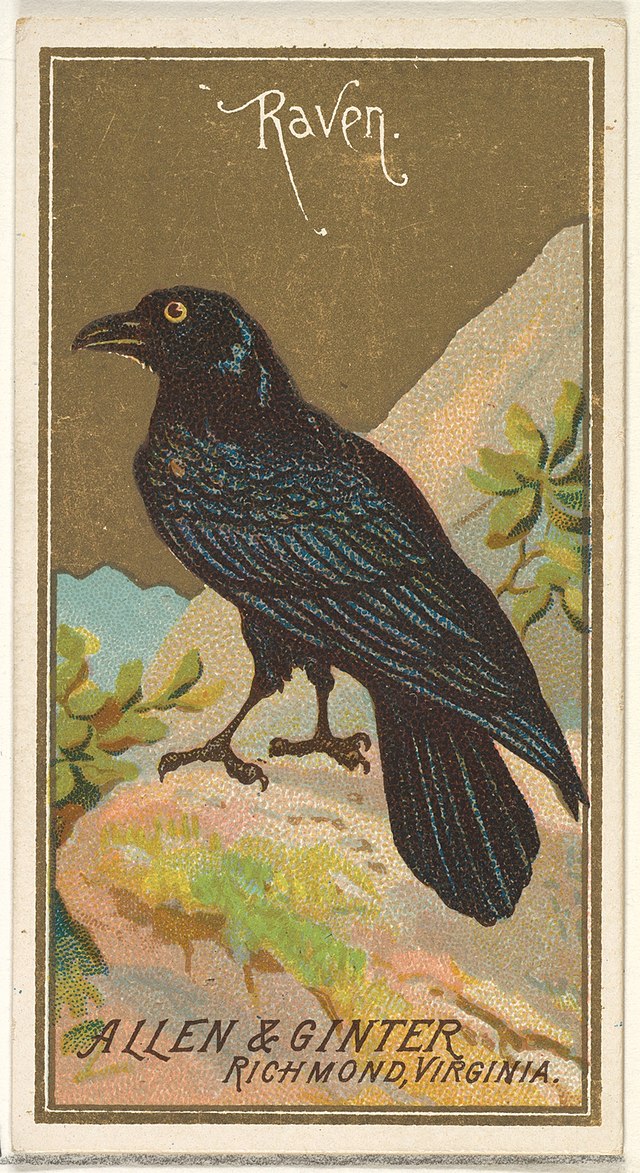
The corpse sat down and kept the boy company all night. The boy was unafraid, and together they talked of many things ancient and modern, sacred and wise. In the morning the boy expected the corpse to rise and return to its rest; but to his surprise, as soon as the first ray of morning sun struck it, the corpse transformed into a young raven and flew away.
“How curious!” the boy exclaimed. He pulled a snack from his bag, rose, and moved on in search of Fear. His day wandering on the road was largely uneventful until the sun had set. Walking along the dark and lonely road, he saw a glow in the distance.
“Fire!” the boy cried and ran in that direction as fast as he could.
Soon he came upon a house that was engulfed in flames. Not a soul was in sight, but in the second story window he saw the silhouette of a maiden and heard a piteous cry.
Completely without fear, the boy ran into the front door and bounded up the steps two-at-a-time, dodging flames as he went. Following the cries of the maiden, he avoided the flames and reached the bedroom where she was trapped. He leapt over the flames blocking the door, scooped up the terrified girl, and out ran with her, oblivious to the heat, flames, and smoke. Out the front door into the yard he ran. There he stood her on the grass and looked her up and down. She was a beautiful thin girl with hair of platinum.
“You seem none the worse for wear,” the boy said. “Are you alright?”
“Perfect, thanks to you, although the house is beyond saving,” she said. “Not even you could save it. Thank you ever so much.”
“All in a day’s work,” the boy said. “See here, you must be thirsty. Let me fetch you some water.”
The boy went to the well, drew up a bucket of water and grabbed the ladle from its hook beneath the cupola. He returned with the water and the two drank their fill. By the glow of the fire they kept company all night long. And when they grew tired, the girl with the platinum hair put her head upon his lap and fell fast asleep. Although he had not found Fear, the boy thought he might be about to find something else that he had never felt before, for the girl was very beautiful indeed.
When morning came the boy urged her to awake. Her eyes opened and she smiled sweetly. But before she could speak, the first ray of morning sun fell upon her and she transformed into a full-grown raven, flew away, and was gone.
“No!” the boy exclaimed, sad to see her go. But there was nothing he could do. Feeling dejected, he produced a snack from his bag, rose, and resumed his search for fear.
His day upon the cold and lonely road passed without remark. At length the road ran along the cliffs by the sea. As he walked he listened to the waves pounding the shore below and watched the iron clouds bang to-and-fro. Just about dark a storm came up. Lightning flashed and thunder rolled, but the boy overcome, not with fear but with admiration for the majesty of the scene. He stopped and looked out at the raging breakers, and there he saw a ship running a-ground in the surf.
Without hesitation, the boy jumped from the cliff and fell a hundred feet down, his body as straight and as strong as a mighty nail, and plunged into the water without a splash. Rising to the surface, he swam out to the ship. As he bobbed about in the turbulent water below, the seamen on the slanted deck above pointed and yelled in the direction of the maidenhead at the fore of the ship, but the boy could not make out their words over the cracking of the ship’s hull on the rocks and clamor of the tempest. Still, he swam in the direction they were pointing.
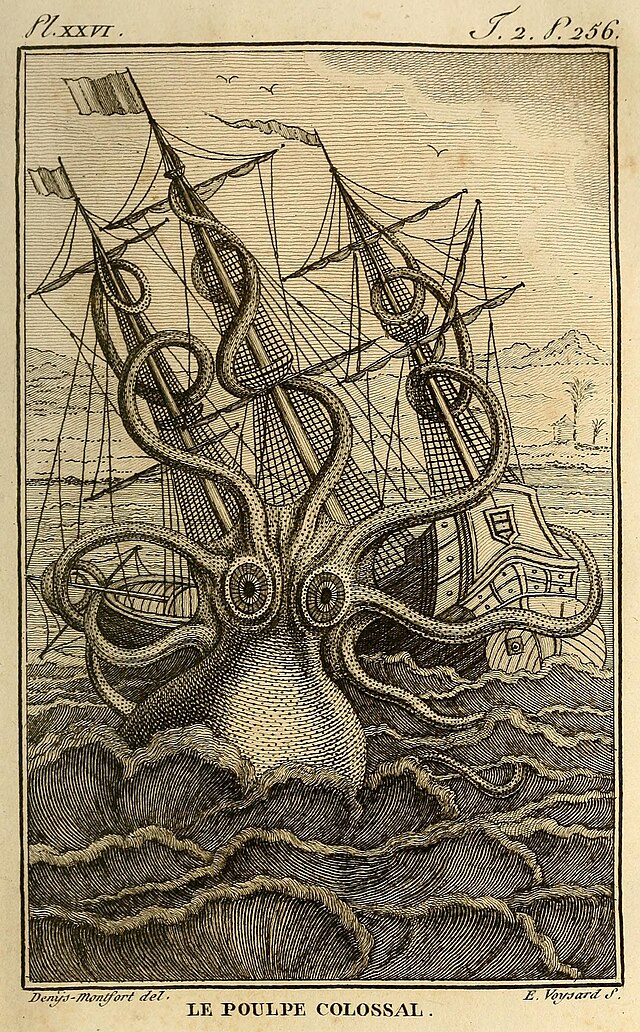
When he reached the bow, he saw a danger even more immediate than the rocks — a horrible tentacled monster threatening to slay the sailors as soon as they dove into the water! The boy grabbed a tentacle and swam unflaggingly for shore, dragging the shrieking beast with him. At one point the beast encircled his entire body, but the boy did not flinch; he bit the animal until it released him and swam on. At length he hauled it far up onto the rocky shore. Out of the water the beast was crippled, and there it flopped and hissed, spasmed and shrieked. The boy left it there and swam back to the boat. One-by-one, he helped the sailors back to shore while their ship broke up amid the storm.
The sailors were overjoyed and offered to take up a collection to reward the boy, but he would not take the coins in their pockets. Together they all took shelter among the caves beside the water and shared company through the night as the storm abated.
Just before sunrise, the boy and the sailors went back to the beach to look at the monster in the light of day. But as soon as the first ray of sun struck the slimy beast, it was transformed into a large raven that took flight and soared off into the distance.
“Curious indeed!” the boy cried. After chatting with the sailors for a bit, and telling them which way they should walk down the beach to find the nearest port, the boy bid them goodbye and began to make his way further down the beach in search of a way back up to the seaside road. At dusk the sandy beach gave out and he came to a cliff so sheer and so high that he could not see its top. The boy looked up into the darkening heights and said, “Surely if I was to scale this dangerous cliff in the dark, I would know fear.”
As the sun fell he began his climb. He whistled a tune as he made his way up, in good spirits despite taking great care when climbing the chalky stone that threatened to crumble beneath his hands. Unafraid of the stiff wind that made him stick close to the cliff face or be blown to his doom, and utterly immune to any fear of the dizzying heights, he looked out in wonder at the incredible view. The moon shone over the dark, pounding surf which echoed up to him like distant thunder. Thin clouds, blowing like silver gauze across the dark blue heavens, glowed when they crossed the path of the moon. He was sure it was the most incredible sight he had ever seen. He sensed something then that seemed very close to what his mother described as fear, but soon realized that it was not fear, but its first cousin: awe.
About midnight he came upon a nest as large as a pig pen piled high with twigs and limbs. Beginning to grow cold, the boy entered the nest and looked about. In its center sat a large grey egg as big as a gallon jug! He went over to the egg, placed his hand upon it, and found it warm. Although the high sides of the nest broke the wind, the egg was in danger of freezing without its mother there to sit upon it.
His stomach grumbled for want of food, for his bag of food had been lost in the dive to save the sailors. This egg would make a hearty and welcome meal, he thought, and the nest provided ample kindling for a cooking fire! But he could not do such a thing to a magnificent egg such as this. Without another thought, and with no fear or worry that its angry mother might return in the middle of the night, the boy sat down and put the orb in his lap. There he spent the night, sharing his warmth with the egg.
In the morning he was delighted to see the sun come up and he turned his face toward it. Looking up he saw that he was only a short climb from the top of the cliff. “You’ll be warm enough soon,” he said to the egg. “Here come the first rays!” And as soon as the first ray of the sun crept over the high rim of the nest and fell upon the egg its shell gave way. Out of the egg came a massive raven, fully feathered and ready to take flight, that swiftly flew away into the rising sun.
“Even curiouser than the last!” the boy cried aloud.
He finished the last of the climb in a trice and made it to the road. As he walked along the boy became convinced that he would never find fear. Certain that he must be some kind of freak, and resolved to the impossibility of the quest, his face grew hot with shame at the thought of giving up. But why go on? He thought it best to head home and comfort his dear mother who must be very worried.
He took a shortcut through the woods, and about sundown he entered the square of the town. All the residents were crowded there, and the town’s elders were addressing the great assembly.
“The King has died leaving no heirs,” the eldest of the elders declared. “Being at an impasse, we have decided to set free this young raven. Whomsoever the raven shall alight upon will be named King.” So saying, the elders released the raven, which wheeled and circled over the crowd. To the boy’s surprise the little raven landed on his shoulder. All the eyes of the town fell upon him.
Gripped by a strange and unknown feeling, afraid for the first time, the boy cried out, “No, I am not qualified!” He thought the young raven looked familiar, but he could not be sure. “And besides, a king must be prepared to die for his country!”
“You must!” the elders insisted, but the boy would not accept. After some argument, some of elders thought it best to choose a king from one of the rich merchants of the city. But eventually they simply decided to try again. They released a second, full-grown raven which again circled over the crowd. To the boy’s surprise, the second raven also landed on his shoulder. All the eyes of the town fell upon him as he realized that this was the raven that once been the platinum-haired girl.
“No, I am not qualified,” the boy proclaimed, now afraid for the second time. “And besides,” he said, thinking of the platinum-haired girl, “a King marries only for allegiances, never for love.”
“You must!” the elders insisted. But after some argument, some of them wanting to pick a worthy knight for the job, they decided to try again instead. They released a third, even larger raven which circled ominously over the crowd.
To the boy’s surprise, the large raven, which he recognized straight away as the one that had risen from the corpse of the sea monster, landed on his shoulder. Again all the eyes of the town fell upon him.
“No, I am not qualified,” the boy declared, afraid for the third time. “To be King is to be responsible for the safety of everyone in the kingdom!”
“You must!” the elders insisted. But after a great argument, some the elders thinking it best to choose one of their own number as king, they agreed to try again by releasing a fourth, and even more massive raven, which wheeled and circled over the crowd.
To the boy’s surprise the huge raven, which he was certain was the one that emerged from the egg on the cliffside, circled above him clearly seeking him out. The boy extended his arm and the huge raven lighted upon it as if it was a falconer’s hunting bird. Now all the eyes of the town fell upon him and there was a great tumult.
“No, I beg of you, I am not qualified,” the boy proclaimed, now afraid for the fourth time. “To be king is put the wants and needs of others ahead of your own.”
Suddenly the boy’s mother appeared from the crowd.
“But you must!” she cried. “I can see the fear upon your face my beloved son. Having found your only fear you are qualified — more qualified than any other!”
With great reluctance boy accepted the title and the crown, and he reigned in peace for many good years until his death – which he faced completely without fear.







 Robert Mitchell Jr.